Showing posts with label mental health. Show all posts

Monday, July 13, 2015

What is Vanity?

These days, it seems that a big part of our lives revolves around vanity. We are constantly connected to social media sources, where we share many instances or sequences of our lives. We keep others informed about what we are doing, with whom, and how much fun that was, etc by posting regular selfies. Last year, more than one million selfies are taken per day. The majority of them were shot by individuals in the age range from 18-24. So even mundane situations, like picking up fruit in a grocery store, buying a latte in a coffee shop or finding a rare creature while working in the yard, will be documented, shared, commented on. Since everyone desires positive feedback from their connections, friends or followers, we begin to imagine our next post long ahead of time: the situation/event that would lend itself; the interesting backdrop; the facial expression that would work with it; and not to forget a witty caption. Then, while posing and clicking the picture of ourselves, we use various slightly different angles to get the best shot, which we carefully select afterwards. And even after deciding which one to use, more than a third of selfie posters admitted to changing/editing their self portraits in some ways before publishing it on social media.

Vanity has become a constant companion and in our thoughts that creates and highly censors the self-image that we present to the world. As people engaged more and more with social media, individuals become their own brands intending to appeal to the broader audience. Approval ratings can be measured in likes, new friend requests, new followers, new connections or new additions to one's circles. While the spheres of the public and private become more blurry as the number of narcissistic individuals increases and life begins to revolve more and more around the intended effect of a post, some real life activities become far less spontaneous and more planned out than many of us would care to admit. The current narcissistic trend of constantly double-checking oneself reminds us of the Greek myth of Narcissus who drowned because he could not take his eyes off his own reflection in the water. Many of today's young adults who over-engage with social media experience similar psychological and social problems that may seem unexpected judging from the happy and confident images that they post. Their own vanity can isolate them, like Narcissus, and take them away from society. For the broader community this leads to a set of other, much deeper lying questions about young adult's identity: What is the real reason that leads them to crave the constant desire or even need of approval and specifically the approval of people they mostly don't even know or don't know well? Why and how have superficial perceptions become so important that they can trump other values that have a much more important effect on our communities?

The generation of my late grandmother would find this trend to document oneself tasteless and misplaced. She and her contemporaries would have wondered who would feel comfortable or rather important enough to record themselves throughout the day. She would have found this absurd. She would have wondered how anybody could think that their daily life could be of interest to others to such an extent that they document it, unless they people of interest in public life. Humbleness and willingness to work hard were the characteristics that people of her time and her context (rural Western Europe) adored. They believed that one should always do good, but not talk about it, because bragging was simply taboo. Showing or appearing arrogant or boastful were unforgivable sins. But individuals of her time made the utmost effort to appear appropriately dressed, even in the harshest economic times. They wanted to be regarded as respectable people in their community and display and guard their good reputation.

The generation of my parents who grew up in the postwar years experienced very harsh times in which hunger, losing loved ones, and poverty unfortunately were the norm. Interestingly enough, though, despite all the hardship vanity still survived and, as I was told, some teenage girls were so concerned with fashion trends that they slept with their hair in curlers made out of toilet paper rolls. Due to economics, fashion was simple those days in Western Europe. After the war, it consisted of patchwork styles (as seen on the skirt on the right) and of re-purposing military uniform jackets, because that was what was available. Since many men were gone after the war, women competed over the few that were there (and not wounded) and were extra careful with their bodies and looks, but life certainly did not revolve around vanity, but much more substantial things: money to buy the basic necessities, education, work, and rebuilding life in a very different way than the previous generations.
Today, vanity and selfies are not at all frowned upon, but instead they are acceptable, expected, and even encouraged among peers. And yes, there is social pressure to post more selfies, so that all the connections can get a better picture about what is going on in someone's life. This is a competitious enterprise and full of judgments. You don't only want to look as good as possible, but hopefully much even better than some of your connections, friends or ""frenemies." You want to come across as more fashionable, skinnier, outgoing, and brave. You also want to have the more interesting/diverse backdrop for your selfies. With the invention of the selfie-stick even better self-documentation can be achieved and a more realistic images of your surroundings can be captured while taking a self-portrait. Unfortunately, the competition over the most exclusive shots has led to a rising number of death in 2014. Not only do many people risk their lives by taking selfies hanging from walls or jumping off buildings, but also being in close proximity to dangerous animals or standing on the tip of the highest skyscrapers. It appears to be a highly disproportionate risk for the possibility of a great photo of oneself. Still, for many young people the possibility of short-lived fame on social media may justify it. This not only goes to show that we humans or a large portion of our species are not at all as intelligent as we could be. Self-protection and securing one's own survival should be highest on the list of priorities.

Taking selfies can not only leads to physical danger, injuries, and possible death, but also and more importantly to deep psychological problems. Narcissism does not only encompass revolving around yourself and needing constant reaffirmation of ones own importance from outside sources, but it is above all the result of a deep-rooted inner insecurity. There is the sad, unimaginable story of the British young man Danny Bowman (19), a so-called "selfie addict" who was aiming for a perfect selfie and attempted hundreds of times per day, but was never satisfied with the outcome. He skipped school and stayed inside his house for six month while he kept on trying. He lost a lot of weight and his whole life tilted out control with an attempted suicide attempt. It is taking long-winded treatment to make it possible for him to rejoin society and participate in normal life. This shows that the mental problems that accompany selfie addicts are serious and should not be underestimated. According to a medical professional selfie-takers have an "extremely high suicide rate."

Studies have shown though, that most of selfies are taken by young women. On the one hand it has to do with the stereotypes about women. Women are always expected to look gorgeous, even if they happen to have stressful lives (e.g. full-time jobs and a family to take care of) with little time to work out or focus on their eating habits. On the other hand, it has been argued that this is a way for women to reclaim their own bodies. Taking selfies, women are in total control of their own pictures and decide on the concrete composition of the image. This has been understood as a form of empowerment. If this is actually a way of cutting the chains of expectations that surround women is clearly debatable. In many ways, it seems to feed into the old stereotypes that women are only seen and not heard. As long as this doesn't lead to any further action that is relevant for a broader section of society, in my opinion, this has little to do with empowerment. The time spent on rotating around oneself and finding the perfect image of oneself could be spent with many more useful activities that would change the world (and the image and perception of women) in a more positive way. Maybe vanity and narcissism are used as a way of escaping reality and ignoring the larger problems that need to be addressed (like poverty, education, racism, violence, etc.)? Maybe some young people can avoid the world and their responsibility in it as long as they don't admit that they are actually part of it. If they live in vanity and rotate around themselves, they identify more with their online world than the real world, which leads to a whole new set of problems.

As parents, we have to wonder how we can protect our children from this growing trend of vanity. We have to make sure that we raise our kids with enough confidence that they don't need constant reassurance from third parties, that they grow up with a secure belief in themselves and the community around them. We have to let them know that as humans we have to accept ourselves and our bodies and that those images of seemingly perfect people that flood the media are highly edited and unnatural. We have to make sure that they are grounded in the real world, so that they grow up with a feeling of belonging. This will allow them to feel empathy and become active for people who need them and causes that they find worthy. We have to teach them that vanity is short-lived and the important things in life take time and a lot of effort to come to fruition. Real accomplishments through dedication and hard work will earn them respect, whereas even the greatest selfie will only give them fame for a very short time, should they even get there. We have to let them know that vanity leads to isolation and despair and cannot make anyone happy in the end.

Sunday, May 31, 2015

What is Laziness?

We all have lazy days when we do not want to get up, drag taking a shower, getting dressed, and simply do not want to accomplish anything. Usually laziness occurs after we have completed a bigger project almost like a reward to ourselves, e.g. after acing a test, doing a good job at a major meeting, signing a big client, etc. We allow ourselves to relax and recover for a short period of time, recharge, and then get ready for the next challenge. However, for some people, laziness has turned from a temporary condition into a chronic condition or a life style. As obesity and physical inactivity are on the rise, laziness has also become an alarming health risk as it is responsible for about 5 million deaths a year that could be prevented.

Chronic laziness has nothing to do with recovery time. Instead, it happens when one would be expected to do something productive, but one cannot and doesn't even intend to do it. While procrastination and laziness share some commonalities since in both cases individuals do not do what they are expected to, psychologists have found that procrastinators intend to do them after a long period of avoiding them, whereas people with chronic laziness have no intention of achieving anything. In their world, the effort it takes to complete a task doesn't seem worth it, so they simply refuse to do it, without consciously deciding so. Laziness is the avoidance of physical and intellectual challenges, any kind of stimulation, change, or long-term goals. The only goal of the chronically lazy individual is the maintenance of status quo. A recent study by Vanderbilt University has detected that not only the minds, but also brain functions were altered in people with chronic laziness. They found that people with less motivation have a different brain activity from those that are highly motivated. Amounts of the chemical dopamine in three brain regions determine if a person is a go-getter or an avoider of work. The chemical does distinct things in different areas of the brain. So while high levels of dopamine in some brain regions were associated with a high work ethic, a spike in another brain region seemed to indicate just the opposite — a person more likely to slack off, even if it meant smaller monetary rewards.

Chronic laziness is like giving up. It is filling time in the most meaningless ways and refusing to live one's life. It is a life without direction, passion, purpose, and connection. Laziness is not only harmful for the body and the brain, but most of all to the self as it systematically reduces self-confidence, self-worth, happiness, and the individual loses the feeling of being connected to the world. As laziness cannot be conquered, the individual loses hope and stability and settles into the mindset of disappointment with himself/herself. This paralysis that chronically lazy individuals find themselves in leads to and is even further increased by lethargy. Psychologists have found that laziness is often connected to Dependent Personality Disorder. An individual affected by this has low self-confidence and doesn't believe in their skills at all so that they are more comfortable to ask others to do something for them, instead of doing it themselves. Laziness has also been linked to Avoidant Personality Disorder, in which an individual is afraid of others' judgment of their performance and thus would rather not do anything (and risk being perceived as ignorant or unskilled) than being judged. A non-psychological, medical condition that chronic laziness has been linked to is Upper Airway Resistance Problem (URAP). URAP is a condition where a patient has smaller than average airway openings that prevent them from getting enough oxygen while in deep sleep. Due to the obstruction of airways, they suffer from chronic sleep deprivation and consider themselves too tired to engage in any kind of effort and thus avoid it. 

An article in the medical journal The Lancet explained in 2012 that for lazy individuals, who get close to no physical activity, the health risk factor is comparable to that of a heavy smoker or someone who is obese. In fact, some current research shows that inactivity now kills more people than smoking, which means that chronic laziness has become even more alarming. It is estimated for the UK that only 7 our of 10 individuals aging 15 and up reach the recommended amount of physical daily exercise. For teenagers aged 13-15 years the numbers are even more dramatic: 4 out of 5 do not move enough. Lack of exercise causes an estimated six percent of coronary heart disease cases, seven percent of type 2 diabetes (the most common form) and 10 percent of breast and colon cancers. Reducing inactivity by a mere 10 percent could eliminate more than half a million deaths every year. In a global comparison, the levels of inactivity in adults were especially alarming in the UK: 63.3% of adults (with higher rates in women than in men) do not meet recommended amounts of activity, such as walking briskly for 30 minutes or more five times a week or taking more vigorous exercise for 20 minutes three times a week. Only the numbers for Serbia and Malta in Europe were worse than those of the UK. For the U.S., the numbers were only slightly better, but still alarmingly high: The Center for Disease Control found that in 2008 about 52% of U.S. adults were not getting the recommended amount of exercise, although these numbers differed greatly with regards to ethnicity, socio-economic status, and level of education. A study by the University of Missouri revealed that blood sugar went increasingly out of control, the longer individuals remained inactive, but if inactivity is the chosen way of life, this experiment showed that the knock-on effect is that the insulin loses its effect and individuals are on the slippery slope to ill health.

Here in the United States, a strong misperception persists about laziness. It is generally assumed that poverty is the direct result of laziness and refusing to work hard, but in most cases the opposite is true. Many poor people have to work extra hard, e.g. several jobs just to get by, some are single parents which adds even more to their plate. In the wrong argumentation people neglect to factor in that here in the United States the social system (although based on hard work) does not grant the same opportunities to all socio-economic classes and once you end up in poverty in a bad neighborhood and a poor school district, it is extremely difficult to ever experience social upward mobility. Historically speaking, it was always the rich people who were physically more inactive as they could afford to hire helpers for any possible physical jobs, like cooking, cleaning, gardening, child-rearing, washing clothes, etc. Throughout history, poor people worked the hardest as they had little or no education and thus had to work more for less money while still having to organize their own lives to keep their families alive and afloat. In social market economies, where the government has a more secure network in place to help people who cannot work (due to mental of physcial restraints), cannot find work (due to high unemployment rate) or cannot find the right kind of work, etc. you will find more cases in which poor people will reject to work for money and chose to solely rely on welfare. In that context, the common link between poor and lazy is a bit more adequate.

With our change to online-culture and increased time spent sitting, inactivity has become much more prominent in the last decade, even more socially acceptable. And although all major religions (Christianity, Judaism, Hinduism, Islam, and Buddhism) condemn laziness, it is still on the rise. All of them admonish their believers in their own way to stay on the religious path and stick to religious habits as a means to fight inertia and don't fall prey to sloth. Buddhism for example even distinguishes between three forms of laziness: 1. not wanting to do anything, 2. discouragement with the task at hand; 3. being too engaged in the world to remain conscious and reflective of oneself and the world. Buddhism also understands only experiencing superficial things and nothing profound (e.g. to many fun activities, but no focus in the self) as a form of boredom. In Hinduism inertia is one of the three ganas: 1. Sattwa = purity; 2. Raja = activeness, and 3. Tamas = inertia. The three ganas, Hindus believe, compete with each other and bind the self to the body. Each individual faces the challenge to keep inertia at bay. They believe that Tamas is born out of ignorance, causes delusion and strongly blinds the affected individual with miscomprehension, laziness, and sleep. In Judaism, time is perceived as sanctified and believers are constantly reminded of the fleeting character of time. Wasting time is considered evil and everyone is encouraged to make the most of every single moment. Similarly, in the Christian realm sloth is perceived as one of the seven deadly sins. "Idleness is the beginning of all vice," people believe. Despite the condemnation of laziness in all major religious and most cultural contexts, still millions of individuals die every year from the effects of physical and mental inactivity.

While chronic laziness has always been negative for one's health and mental state, throughout history the ambition to avoid hard work has served as inspiration for new inventions. Smart people who wanted to avoid physical work, always sought of ways to make life more comfortable and less physically challenging. Bill Gates is quoted having said that he would always choose a lazy person to do a difficult job, because he/she will always find an easy way to do it. In today's modern world however, the necessities and discomforts of survival have become so little challenging and almost non-existent that there is no requirement of physical activity, unless we create it for ourselves. This development requires a far more conscious and responsible individual who is willing to accept the challenge posed by this oversimplified world and consciously reject the path of least resistance. In many industrialized nations a good part of the population has become well aware (some by the "Sitting is the new Smoking" campaign) and try to integrate physical activity more and more into their daily lives. Some walk, run, or otherwise exercise during lunch break, add standing desks to their office furniture or bike or run to work to make sure that they get the recommended amount of physical activity. Next to that we also have to remember to keep challenging ourselves not only physically, but also intellectually, so that we don't fall into the trap of overindulging in time spent in passive, meaningless behaviors. We don't want to be remembered as the ones who did nothing of importance, wasted a lot of time, and died young, but as those who created great memories and added meaning and purpose to their own lives as well as that of others. It is especially important for parents to be role models and to protect their children from the patterns of inactivity, so that they can have a more fulfilling, active, and healthy life. We have to use the limited chain of moments on earth to do good and achieve something worthwhile for ourselves, our families, and our communities.

Tuesday, February 10, 2015

What Exactly is Time?


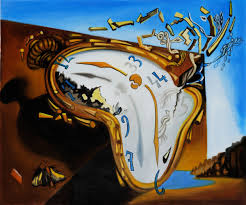
As we prepared and celebrated my older daughter’s birthday last week, I was thinking back to all the milestone moment in her life, wondering how we made it this far, and ELEVEN years passed by so quickly. Isn’t it strange? We have proof that it has been eleven years, but still it seemed so much shorter (even though some of the days felt that they would never end).  Why do we perceive time as expanding sometimes and standing still at others? What makes it go faster and what slows it down? Which factors play into changes in its perception? Time is never the same. It seems to be tied to emotions and it also has to do with one’s stage in life. Since Einstein we know that time is relative. It changes according to perception and according to the system that it is bound to. But what does that even mean? And how does perception of time change over the course of one’s life?

For children, time seems to consist of long periods of waiting for specific activities and events to occur. They focus on events and developments in the future. They get excited and try to figure out how long they have to wait before those events are finally there. As soon as they can, they ask e.g. if it is their birthday yet, how many days until their favorite holiday, and when will they see grandma again. Their focus on events in the future converts big chunks of the present into waiting time. The past is not at all interesting for them. There are lots of hope, dreams, and aspirations tied to their perception of they future.  They dream about what they want to be, where and how they want to live, who they may consider marrying, etc.

When we become parents, the focus shifts abruptly, as our lives suddenly get dominated not only by the needs of others, but also by the shift from the focus on the future (awaiting the day the baby will be born) to the present (baby needs to be fed and cleaned, etc.). Work has to be accomplished in the here and now so that the child has a bright, healthy, and promising future. The parents then await the child to reach their developmental milestones, but their own focus is the present. Events of the future have to be considered, planned, and executed. At work everything is about getting the task done that needs to be accomplished at that specific moment, deadlines haunt us. At home it is not much different. All the little things have to be prepared, breakfasts served, lunches and snacks packed, laundry cleaned, etc. If a birthday is approaching, like in our house recently, not only the gifts, the cupcakes, the birthday cake have to be organized and delivered to the appropriate places at the correct times, but most likely a party will be held to mark the milestone, which also entails careful preparation. While children probably only have an awareness of the upcoming party, parents are well aware of all the work that leads up to the special event. So in this stage of life we have to be focused on the present. Often we get overwhelmed because it seems that there is not enough time to accomplish everything that needs to be done. Lots of people feel that they are “running out of time” or “have no time.”

As we age and our kids leave us to live their own lives, we tend to live more and more in the past, remembering good and bad times in our childhood and thinking back to the memorable days when our own children reached their specific milestones. Focus shifts to the past and time starts to be measured by the time SINCE something happened: “five days since my daughter called me” or “two weeks since I saw them”. Time is measured in the intervals that are between the visits with family and friends and time spent together. Again, like in childhood, there are long stretches of waiting time that are not filled with so many aspirations for the future as memories of the past.

We all know well about the physical changes through which the passing of time manifests itself. For children, these signs are hopefully awaited (first lost tooth, first beard hair, first signs of development) as they signify the entering into a new phase in life. They want to grow and become full members of society. For parents, it is a dreaded shift, that people are determined to stall as long as possible or to fight head-on. Who wants to have grey hair, an increasing waistline, and wrinkles? There is a multi-billion dollar industry making profits from us all not willing to accept the process of aging, but that may be a good theme for a different blog post.

How we experience the passing of time is not only linked to our stage in life, but also to all kinds of emotions. When we are having a good time for example, time appears to pass very quickly, “it flies”. And when we are bored or waiting for something to happen is seems to drag endless or even “stands still.” But intense emotions seem to have an even more profound effect on our way of experiencing time. When we grieve the death of a loved one or suffer from a break-up of a long relationship, we only feel grief and sadness. It consumes us. There is no room for anything else. The same thing is true for the opposite emotions. When we are completely happy for example, laughing with our kids, rolling on the floor, we are consumed by happiness. We BECOME that emotion and time seems to stand still. We do not think about anything else, not the future, not the past, we just completely live in the moment. Similarly, when we immerse ourselves in an activity that we love to do (for some it may be their job, for others it may be a hobby), we tend to forget things around us and completely live in the moment. As if space and time become irrelevant. (Just think about new lovers who seem to forget time.) So, perception of time, it seems,  also has to do with our undivided attention, but it also has to do with how well we immerse ourselves in the activity that we are engaged in at the moment.

Studies have shown that meditation can alter the perception of time by changing mechanisms in the brain. While meditating, the outside world is systematically blocked out and the focus shifts to inside the body and the mind. As a result, influences that usually distract us, are contained before they even get to us. This not only improves our mental and physical health, but also can adjust our perception of time through relaxation and re-shifting focus. Time then “slows down” again. Buddhist monks for example are able to conduct so focused meditations (and slow their breaths) that sitting still and focusing on the inside, they believe, allows them to see a glimpse of the divine that may allow them to escape the everlasting cycle of rebirth and life. That means that focus, in a way, can help us escape the boundaries of time. The same mechanism is at work while practicing yoga. By remaining in yoga poses, slowing one's breaths and concentrating on the muscles used to remain still in the poses, focus can also be shifted and time perception can be altered subsequently.

So what do we get from this? Besides me finding it extremely interesting to think about, it may help us when we get caught up in daily rushes and worries. Maybe when we “run out of time” it is good to stop for a minute and consider the moment that we live in and refocus on the important things. In the end, time is all we have in life. The more memorable moments we create for us and for others, the more beautiful memories we can look back on and contemplate once we are old and have more time.